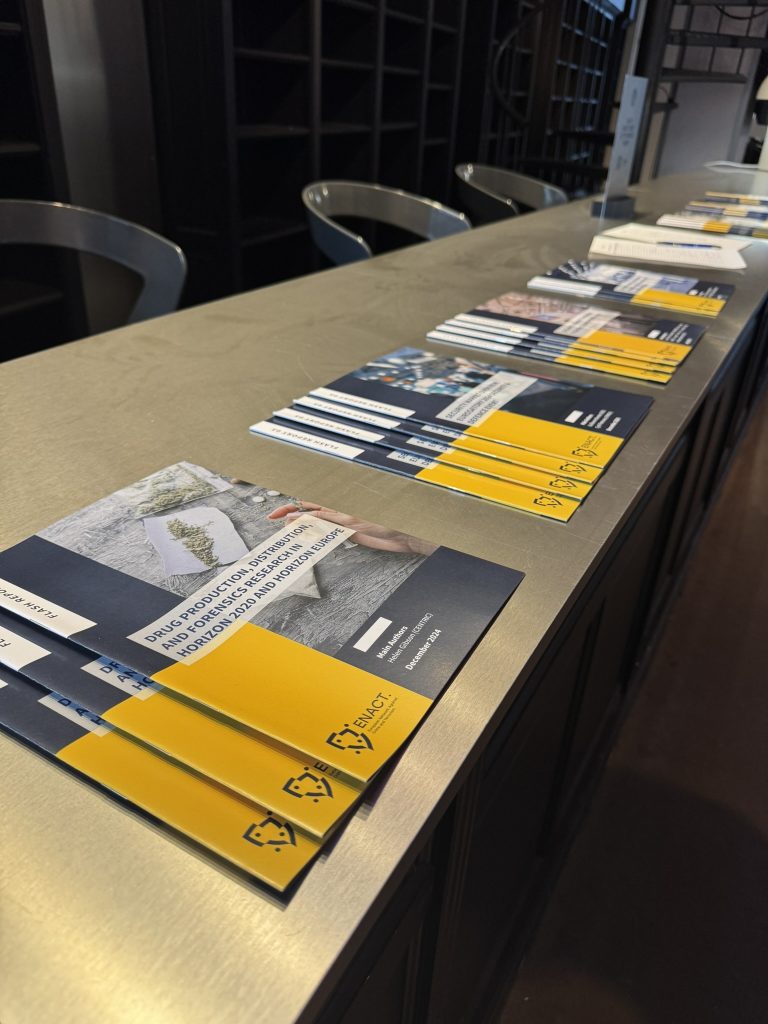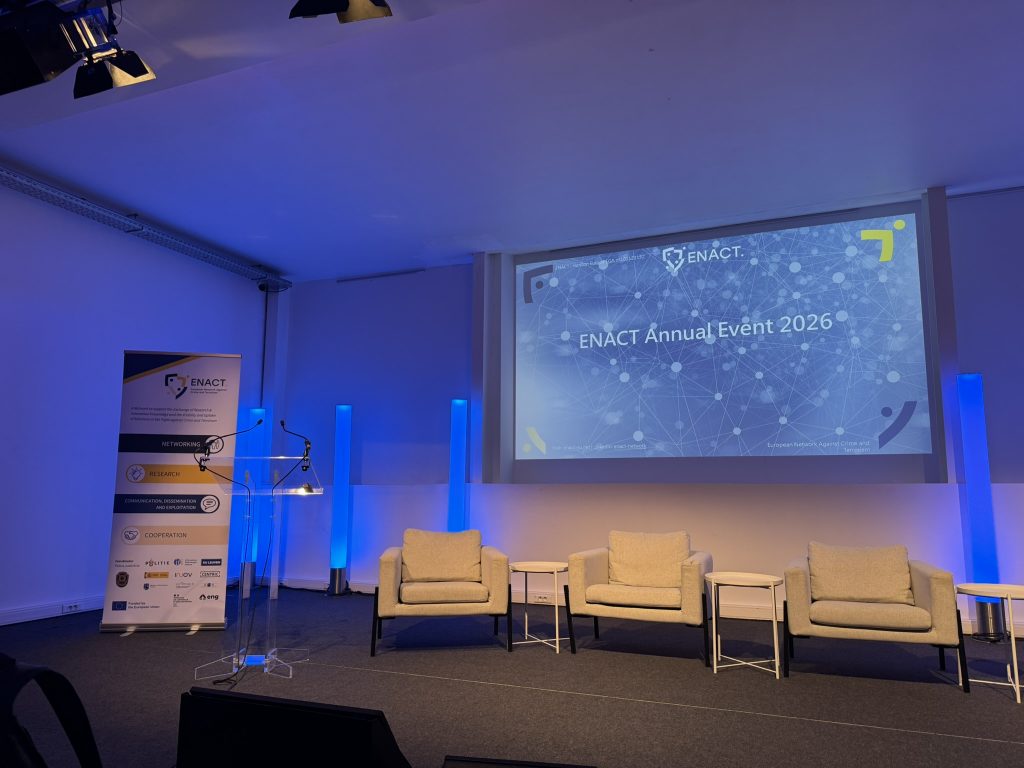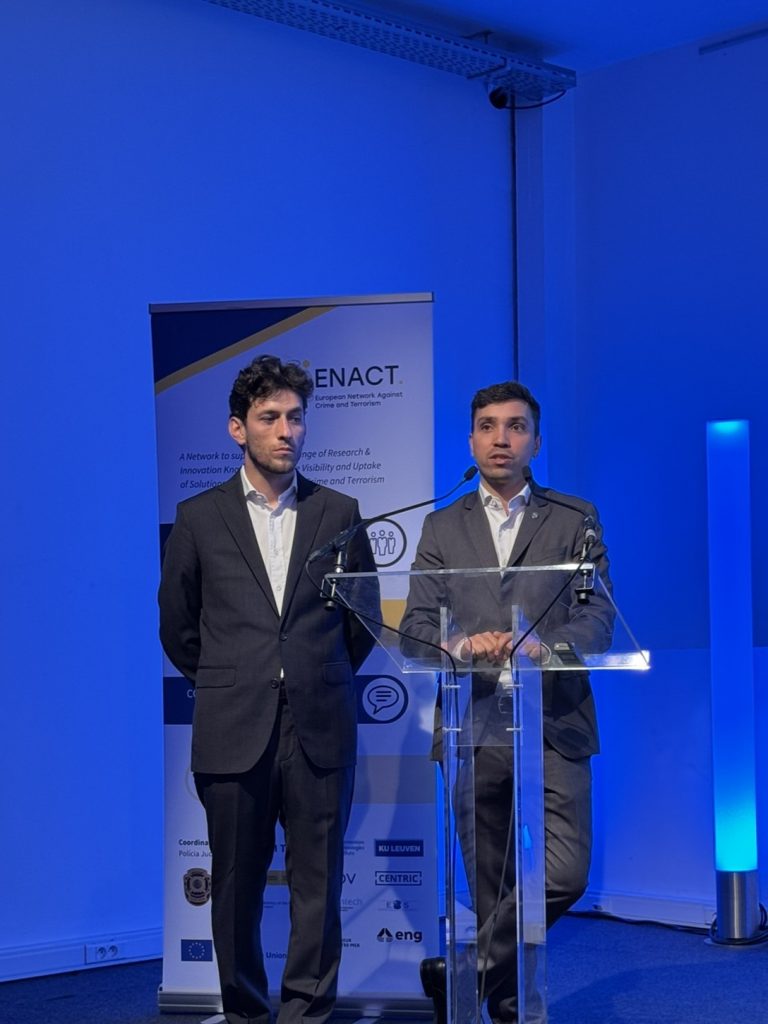
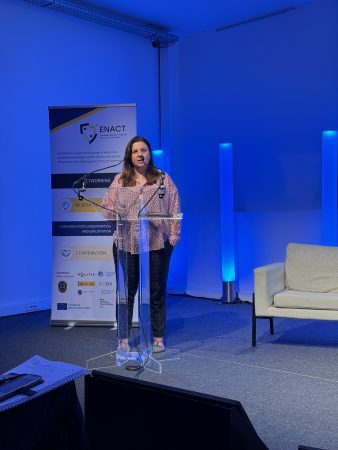
On the 23rd July, ENACT hosted its final event at The Egg in Brussels, joined by representatives from the FCT R&I Community.
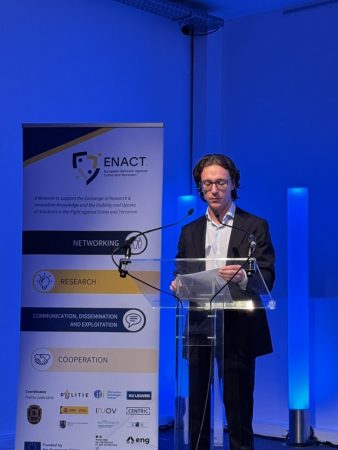
The event kicked off with a welcome speech from the coordinators and a keynote from Filippo Giacinti (Policy Officer at DG Home with responsibility for SSRI). As was a running theme for the event, the speech focused on the sustainability of research and innovation, touching on key topic areas such as the growing need for European technological sovereignty, especially in the security space, and how to transform innovation potential into strategic capabilities.
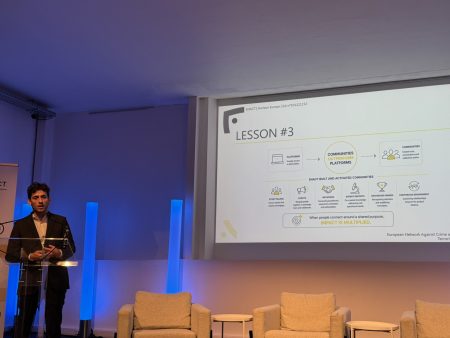
The next presentation focused on ENACT’s achievements and lessons learned over the past three years. Focused on how ENACT has recognised the fragmented knowledge and the challenges that causes in maximising impact of the projects. The key recommendations from the project include continuing to invest in knowledge networks and innovation uptake, support the creation and dissemination of expert knowledge, ensure strong cooperation with EU agencies, and maintain repositories of knowledge so that everyone can benefit from European research.
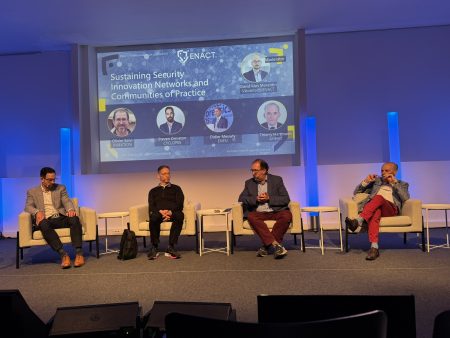
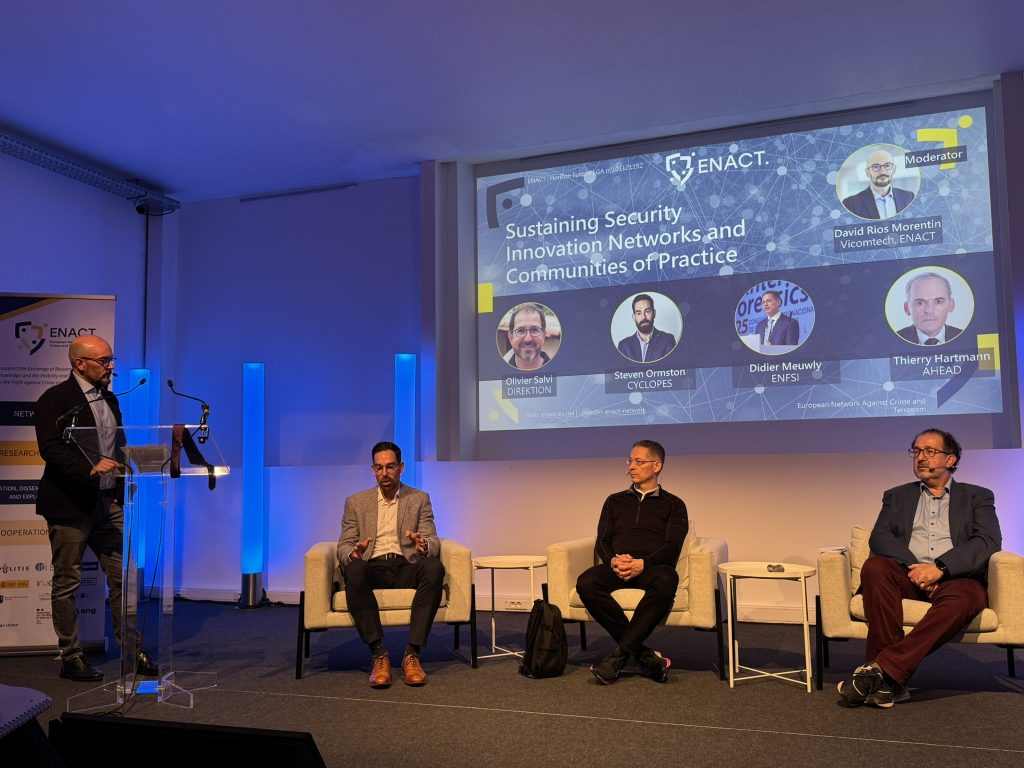
The first roundtable was chaired by David Ríos from Vicomtech, discussing how to sustain security innovation networks and communities of practice. With input from Olivier Salvi of the DIREKTION project, Steven Ormston from CYCLOPES, Thierry Hartmann from AHEAD and Didier Meuwly from ENFSI. The discussion considered which elements from knowledge networks are worth sustaining – what are the most valuable outputs, and then the mechanisms for how to sustain them.
If you’d like to contribute to ENACT’s views on sustainability , please complete our short survey – https://forms.cloud.microsoft/e/jA4Y6hmngV
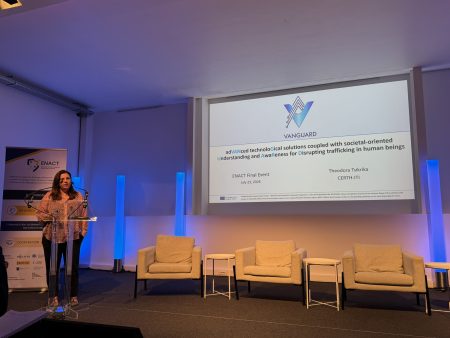
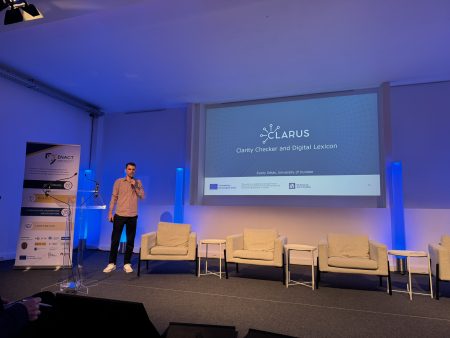
In the afternoon, ENACT provided the opportunity to CLARUS and VANGAURD to showcase their tools through the validation facility. CLARUS presented its Clarity Checker aiming to support digital forensics experts in writing reports, ensuring their clarity and objectivity. While VANGUARD demonstrated its investigative solution for detecting online trafficking through sexual and labour exploitation.
In the final panel session, moderated by Filipe Rodrigues of the Polícia Judiciária, we were joined by Nizar Touleimat (European Defence Agency); Apolline Rolland (EuropolInnovation Lab); Kris D’Hoore (Belgium Federal Police); Guillaume Brumter (European Organisation for Security) to discuss some of the challenges and barriers that prevent EU security innovations from reaching the field. The panellists considered several interesting topics such as
- How to streamline the innovation pipeline, focusing on quality rather than quantity of R&I outputs, addressing specific LEA needs and requirements. Are R&I projects able to take enough risks to deliver true innovation, and how to accept failure as part of the innovation process?
- Who are the responsible actors in the innovation cycle, who takes ownership for transforming R&I outcomes into products, and what capacity do LEAs have to absorb innovation into their existing structures? How can solutions be exploited as quickly as possible?
- Innovation in the FCT space is as much, if not more, about community rather than products and platforms. Community is one of our strengths; therefore, we should utilise it more effectively.
- What sustainability options are out there? Are there opportunities to utilise common procurement routes or consolidate resources into more targeted R&I activities? Is there enough follow-up on which approaches succeed and which don’t? Can we build a better evidence base to understand what works for researchers and LEAs?
We thank all contributors and attendees for their thought-provoking insights and contributions to ENACT over the past three years.